Your procurement manager needs forty identical items reordered before Friday. They find the product, add the quantity, and reach a consumer checkout that offers no account pricing, no quote request, and no invoice option. The order turns into a phone call, followed by an email asking someone to confirm the price.
That's the gap a business buying path needs to close. A trade customer isn't always looking for inspiration. They may need approval, proof of compatibility, a delivery commitment, or a reliable way to repeat last month's purchase without rebuilding it.
The details vary by business. A salon owner following wholesale hair buying tips for stylists needs clear professional eligibility and purchasing conditions. A facilities manager needs the correct part, an approved quote, and pricing tied to the company account.
These B2B ecommerce examples solve different buyer tasks, from account registration and quote handling to professional education and distributor discovery. They aren't interchangeable software recommendations. CIQRA is a platform you can build on; the other examples are merchants and manufacturers whose buying paths offer patterns worth adapting. Compare the work each removes, not just the storefront's appearance.
Table of Contents
How each B2B ecommerce example handles trade access and buyer tasks
Turn These Examples Into a Buyer-Ready Checklist for Your Store
1. CIQRA B2B & wholesale
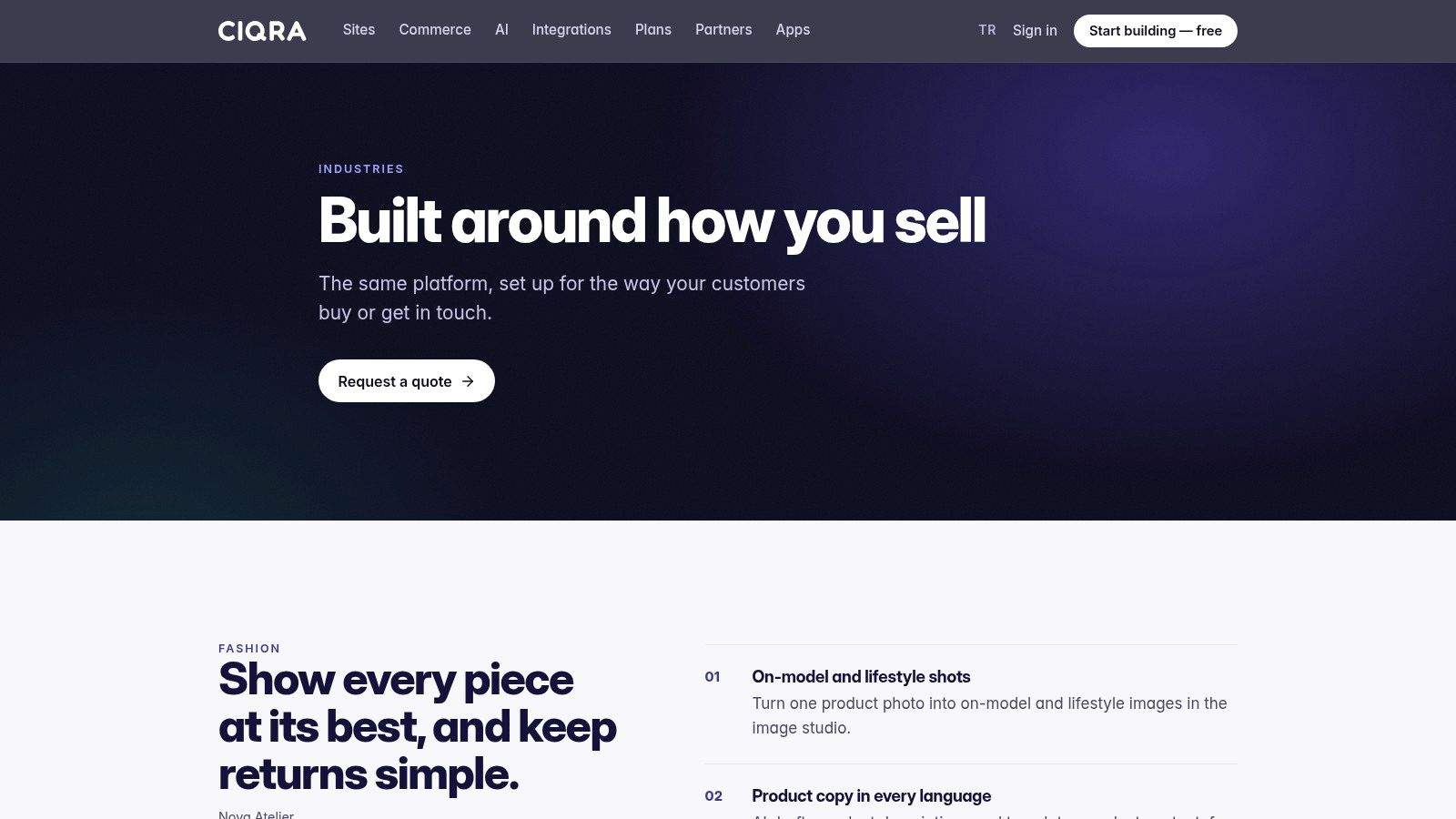
A supplier should not have to maintain product pages in one system and trade orders in another. CIQRA Sites and CIQRA Commerce share one platform and admin, so a business can add catalogue, basket, checkout, payments, shipping, promotions, loyalty, and a returns portal without migrating its existing site content.
Buyer task removed: managing trade commerce separately from the company website.
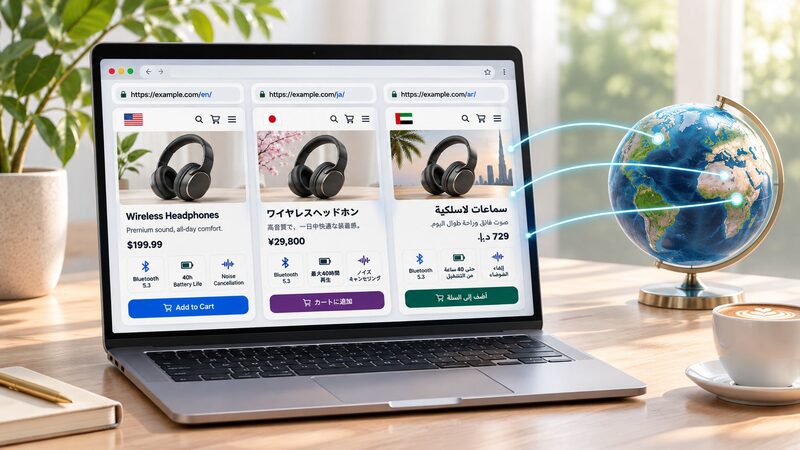
CIQRA B2B & wholesale supports business accounts and more than one store. Stores can sell in several languages and currencies, while business buyers can enter an EU VAT ID that is checked before the order is placed. PDF invoices, packing slips, and customer-initiated returns for registered customers and guests sit within the same commerce operation.
What works and where the limits matter
The strongest fit is a team that wants shared administration with clear operational controls. Roles, permissions, approval workflows, and activity logs help staff control publishing and account changes. Those controls should not be mistaken for a confirmed purchasing-approval hierarchy inside a customer's company account. A business account identifies the buyer; the merchant still needs to define who may register and what evidence is required.
Available now: Business accounts, multiple stores, multilingual selling, several currencies, VAT ID checking, and returns started by signed-in customers or guests.
Roadmap items: Dealer price lists and accounting connectors are still on the roadmap, so businesses that need them should confirm current fit before launch.
Operating boundary: CIQRA states that hosting is in the European Union. Each merchant remains responsible for its products, prices, fulfilment, delivery, returns, warranties, and after-sales service.
A shared platform does not remove catalogue preparation. Products can be imported from a CSV file or a supplier's XML feed, but product identifiers, usable images, delivery rules, and account-registration requirements still need attention. Setup effort depends on that preparation and on the buying process the store must support.
CIQRA's guide to B2B ecommerce trends and future predictions provides planning context, but a launch decision should rest on a working buyer journey rather than a future feature list.
Feature to check: Create a test business account, place an order, and confirm that staff can retrieve its customer details, invoice, and return request without switching administration systems.
2. Grainger
Buyer task removed: carrying a quote through internal approval without rebuilding the order.
A maintenance buyer may know exactly what's needed but still lack permission to purchase it. Grainger accommodates that distinction with business accounts, customer-specific pricing, and online quotes that buyers can save, share, print, and convert into orders. Phone and branch support remain available alongside online ordering.
The useful pattern is continuity between product selection, approval, and purchase. A quote should preserve the selected products and quantities while making the applicable conditions clear. If the approver changes a quantity or substitutes an item, the buyer should see the revision inside the same quote instead of starting a fresh basket.
Practical rule: Treat a quote as an order in progress, with an owner, a revision path, and an expiry date.
Specification quality decides whether the quote can move. On any technical product page, including one for low slope metal roofing screws, dimensions, intended application, and pack information need to be visible before approval is requested. A convenient purchasing flow cannot repair an uncertain specification.
Grainger's broad industrial assortment suits consolidated procurement, though it can feel less focused than a specialist store. Account-specific pricing and credit access also depend on account setup or approval, so a visitor should not expect every purchasing option before registration.
When evaluating B2B and wholesale capabilities, separate quote capture from quote conversion. A form collects a request; a workable flow also names who responds, how revisions are handled, and what happens when the buyer accepts.
Feature to copy: Give each saved quote a clear route into an order, preserving item identifiers and quantities while flagging any changed price or availability.
3. AMR Hair & Beauty
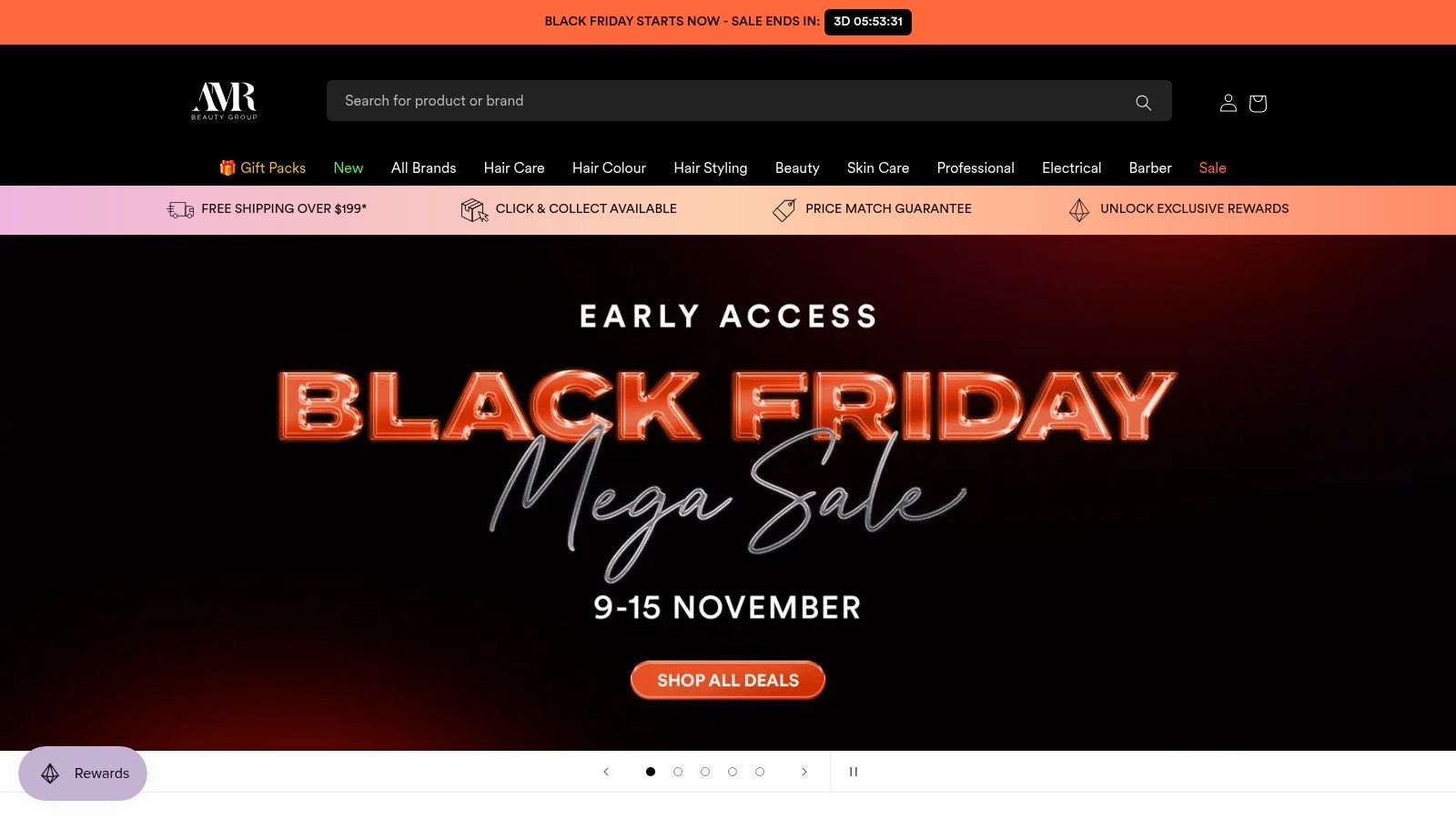
Buyer task removed: finding professional purchasing options inside a public retail catalogue.
AMR Hair & Beauty serves both public shoppers and industry professionals. Its trade programme adds professional purchasing options to a browsable catalogue, with applicants supplying supporting documentation and receiving approval before accessing the relevant benefits.
That's a useful model for brands that don't want separate public and professional websites. Visitors can explore hair, salon, and beauty products without first proving eligibility. The trade application then distinguishes professional purchasing from ordinary retail shopping.
Make account status understandable
Trade pricing, quantity-break offers, and trade promotions give professionals a reason to register. The operational challenge is explaining what changes after approval without exposing benefits to the wrong account.
Before application: Explain who qualifies and which documents the applicant needs.
During review: Show that the application is pending rather than leaving the buyer to guess whether registration worked.
After approval: Make the account's purchasing benefits and applicable offers easy to recognise.
AMR's delivery and click-and-collect options are Australia-focused, so international sellers should copy the account pattern rather than assume its fulfilment model fits their market. Trade pricing also won't necessarily be visible to every visitor.
The compromise is extra onboarding work. Verification protects the professional programme, but unclear instructions can turn a legitimate salon buyer into a support ticket. Keep rejected, incomplete, and pending applications distinguishable, and tell applicants how to resolve missing information.
Feature to copy: Add an eligibility checklist beside the trade-registration form, then test the same product page while signed out, awaiting approval, and signed in as an approved professional.
4. The Conran Shop
Buyer task removed: deciding whether to approach the brand as a project professional or a retail partner.
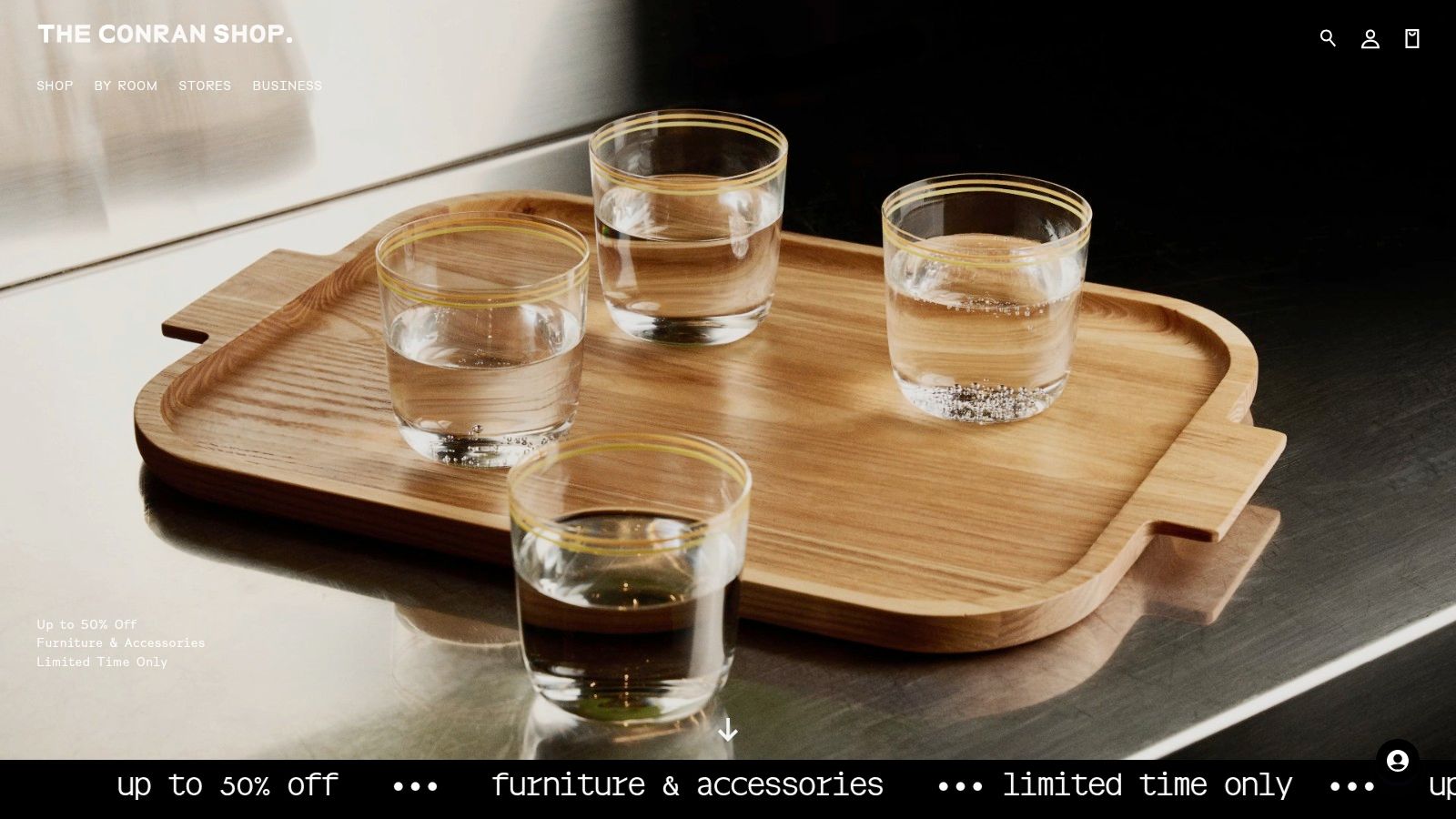
An interior designer sourcing lighting for a project has a different request from a retailer seeking stock for resale. The Conran Shop provides separate trade and wholesale enquiry routes alongside its furniture, lighting, and home-accessory presentation.
That separation is the lesson. Trade support and wholesale distribution aren't the same relationship. A project buyer may need help with finishes, quantities, delivery coordination, or suitability. A prospective stockist needs information about the commercial relationship and assortment.
Don't send every business enquiry to an undifferentiated contact form. Ask enough to route the request to the right person.
The design-focused catalogue helps buyers understand the products before starting a conversation. It's a useful approach for considered purchases where a standard basket can't capture the full requirement.
The limitation is equally important: an enquiry route isn't a self-service trade portal. Public trade information emphasises contact, while account terms and purchasing functions may require a conversation. Don't infer negotiated pricing, saved project lists, or online quote approval from the presence of a trade page.
For your own store, use separate forms only when staff handle the requests differently. Ask project buyers for product references, quantities, destination, and required delivery timing. Ask prospective retail partners about their business, location, and intended sales channels.
Feature to copy: Create distinct trade-project and wholesale-partner enquiry forms, each with relevant fields and a clear explanation of what happens after submission.
5. Dermalogica PRO
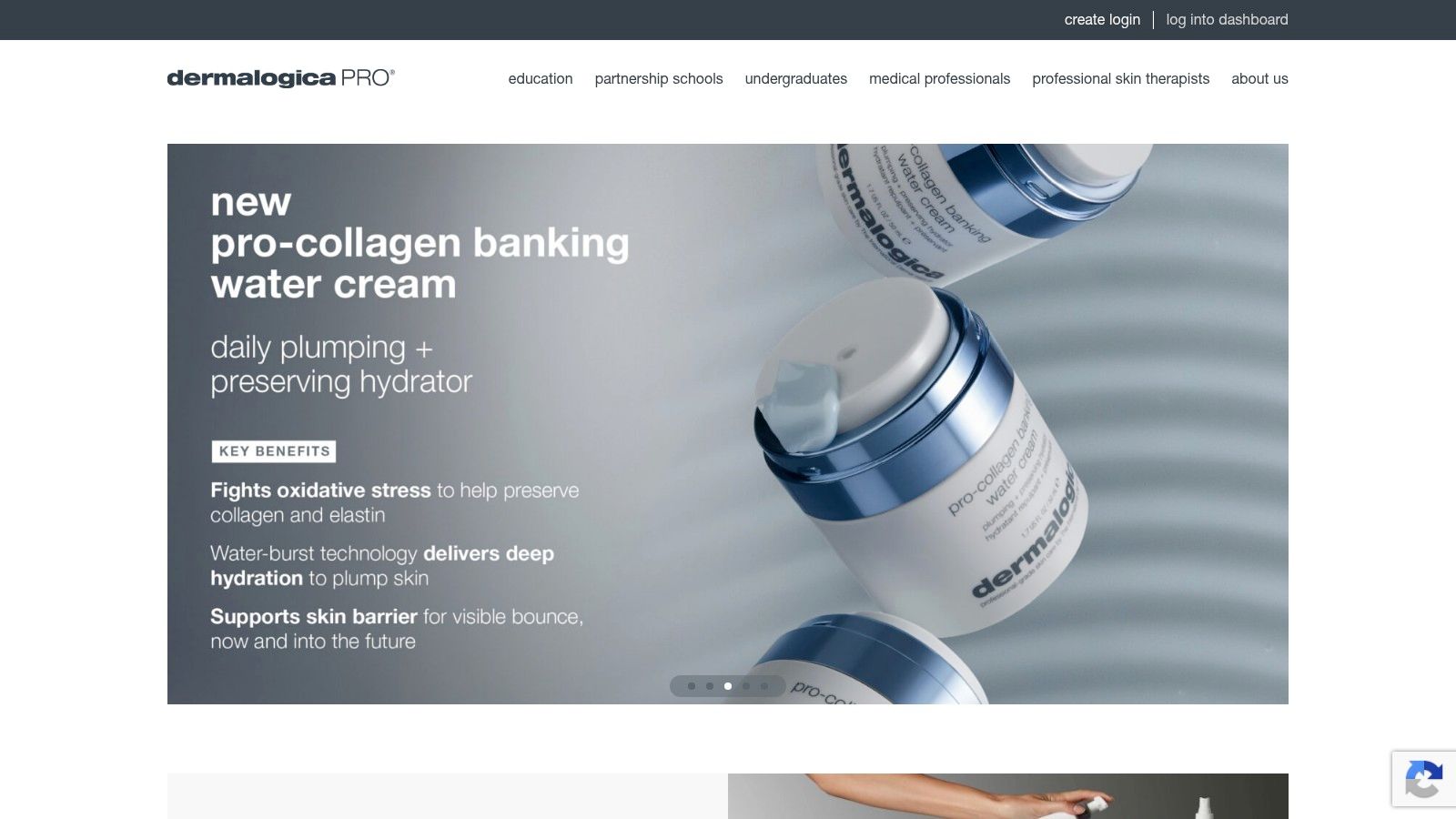
Buyer task removed: working out how to become an eligible, informed professional customer.
Dermalogica PRO combines professional account access with education, treatment information, and business support. It identifies skin therapists and professional businesses as its audience rather than treating wholesale access as a discount programme for any shopper.
That distinction matters when customers need knowledge as well as stock. A professional buyer may need to understand how products fit a treatment offering before deciding what to purchase. Education belongs close to the account-opening and product-selection paths, not in an unrelated content archive.
Support the purchase without hiding the conditions
Dermalogica PRO offers guided account opening and an online account-creation route. Its initial-order option has purchasing conditions, so a smaller business needs to understand the commitment before proceeding. Some account and purchasing details require registration or consultation.
The trade-off is guidance versus immediate access. Professional verification and consultation can help establish the right relationship, but they add steps for a buyer who already knows what they need.
For an equivalent store, make these responsibilities explicit:
The applicant's job: Supply the required professional and business information.
The supplier's job: Explain eligibility, opening-order conditions, and the next step.
The content team's job: Keep product, treatment, and training information consistent.
Don't measure onboarding only by completed registrations. Review where applicants pause, which questions staff repeatedly answer, and whether approved customers can find the information needed for their initial purchase. Those observations help distinguish necessary verification from avoidable confusion.
Feature to copy: Place an account-opening guide beside the application, covering eligibility, required information, purchasing conditions, and relevant training resources before the buyer submits.
6. Tony's Chocolonely

Buyer task removed: finding the right purchasing route for resale or corporate gifts.
A shop owner buying chocolate for resale isn't placing the same kind of order as an employer buying customised gifts. Tony's Chocolonely separates wholesale enquiries from corporate gifting and offers customisable wrappers for gift orders.
The distinction helps a buyer identify the right commercial conversation. Resellers need a supply relationship; gift buyers need to discuss personalisation, quantities, artwork, and delivery. Sending both groups through an ordinary consumer basket would leave important questions unanswered.
Wholesale route: Help prospective retailers explain their business and resale needs.
Gifting route: Collect the occasion, customisation requirements, delivery destination, and timing.
Shared brand information: Keep product storytelling consistent across business and consumer pages.
The brand's mission and product presentation remain relevant to business buyers. A retailer needs to understand what they're putting on the shelf, while a corporate buyer needs to know what the gift communicates. Neither group should have to reconstruct that information from unrelated pages.
The trade-off is that an enquiry-led process doesn't provide instant purchasing certainty. Full pricing and ordering conditions may require contact, and availability can vary by market. A visible gifting page shouldn't be interpreted as a promise that every wrapper design, destination, or deadline is supported.
For your own operation, assign ownership of artwork approval before accepting a customised order. Record the approved version with the order so production staff don't have to search an email thread.
Feature to copy: Add separate resale and corporate-gifting entry points, with a gifting form that captures artwork requirements and the required delivery date.
7. CeramicSpeed
Buyer task removed: finding the correct partner and understanding the rules before ordering.
CeramicSpeed demonstrates a manufacturer-led B2B model built around retailers, distributors, and specialist products. Its public site supports distributor discovery by country, while B2B terms address orders, order changes, and customised products.
For an international manufacturer, direct checkout isn't always the right destination. A buyer may need a local distributor instead. Partner discovery is part of the buying journey, not just a corporate directory hidden in the footer.
Make access and ordering rules distinct
CeramicSpeed distinguishes retailer relationships from programmes for industry employees and athletes. That prevents a broad industry connection from being mistaken for reseller eligibility. Different relationships need different entry points and conditions.
Public ordering terms are also useful before a buyer commits. They help set expectations about changes and customisation, even when account pricing isn't publicly visible.
Operator's check: A dealer locator should help a buyer reach a relevant seller, while the B2B terms should explain the conditions that seller relationships operate under.
The compromise is less direct control over the final transaction. Buyers may need to purchase through a local distributor, and the manufacturer's public site won't necessarily show every business price or account function.
Technical product information must remain useful across that handoff. Follow a consistent approach to writing product descriptions, including compatibility, identifiers, specifications, and limitations. Don't force a distributor to correct ambiguous claims after the buyer has selected a component.
Feature to copy: Build a country-based distributor finder with a clear contact route, and place business-order terms near the retailer-access path rather than burying them in general website policies.
How each B2B ecommerce example handles trade access and buyer tasks
Item | Trade access model | Standout B2B feature | Best for |
|---|---|---|---|
CIQRA B2B & wholesale | Business customer accounts on a hosted commerce platform | Shared website and store administration with roles and approval workflows | Businesses managing B2B commerce and website operations together |
Grainger | Business accounts with customer-specific pricing | Saved, shareable quotes that can be converted into orders | Industrial suppliers serving repeat organizational buyers |
AMR Hair & Beauty | Trade accounts require eligibility documents and approval | Trade pricing, quantity breaks, and promotions | Retailers serving both professionals and the public |
The Conran Shop | Trade and wholesale enquiries | Separate pathways for trade professionals and wholesale partners | Design-led home brands with project-based business buyers |
Dermalogica PRO | Verified professional accounts | Training and business support alongside professional products | Beauty brands supporting professional customers |
Tony's Chocolonely | Wholesale and corporate gifting enquiry routes | Customizable wrappers for corporate gifts | Consumer brands serving resellers and gifting customers |
CeramicSpeed | B2B access through a dealer network and industry programs | Public B2B terms and international distributor listings | Specialist manufacturers working with retailers and distributors |
Turn These Examples Into a Buyer-Ready Checklist for Your Store
The strongest B2B ecommerce examples make a specific purchasing task easier. Grainger preserves the quote journey. AMR distinguishes professional buyers from public shoppers. The Conran Shop separates project enquiries from wholesale relationships, while CeramicSpeed helps buyers find the appropriate partner.
Use those patterns to audit your store before adding more features. Start with the buyer who knows what they need and wants to finish the task without contacting support.
Registration: State who can apply, what evidence they need, and how they'll know they're approved.
Account visibility: Compare what visitors, pending applicants, and approved buyers can see. Explain any restricted prices or products.
Quotes: Confirm that requests capture product identifiers, quantities, delivery requirements, and a usable contact.
Repeat purchases: Check whether customers can locate previous orders and identify the same products without starting from scratch.
Partner discovery: Make trade, reseller, gifting, and distributor routes distinct where the relationships differ.
Exceptions: Explain what happens when stock changes, delivery slips, an order needs amendment, or a buyer requests a return.
Don't stop testing at payment. In its B2B ecommerce trends report, DHL found that 48% of sellers prioritise logistics partners with faster transit times. A checkout that accepts an order still needs a credible delivery process and an understandable route for resolving problems.
Our platform supports business accounts and multiple stores within the same administration setup. The B2B basics are available today, while dealer price lists remain on the roadmap. Business buyers enter an EU VAT ID that is checked before the order is placed; that validation shouldn't be confused with approval for credit or negotiated commercial terms.
Before launch, test your checkout as a trade buyer. Apply with a fresh account, find a product, establish the applicable price, place an order, retrieve the invoice, and start a return. Record every point where the buyer needs an explanation, then fix the most consequential gaps before inviting customers.
CIQRA offers hosted website and commerce tools with shared administration, business accounts, multiple stores, and multilingual selling. Visit CIQRA to explore a foundation for your trade storefront, then use these buyer-task checks to define what your launch must support.