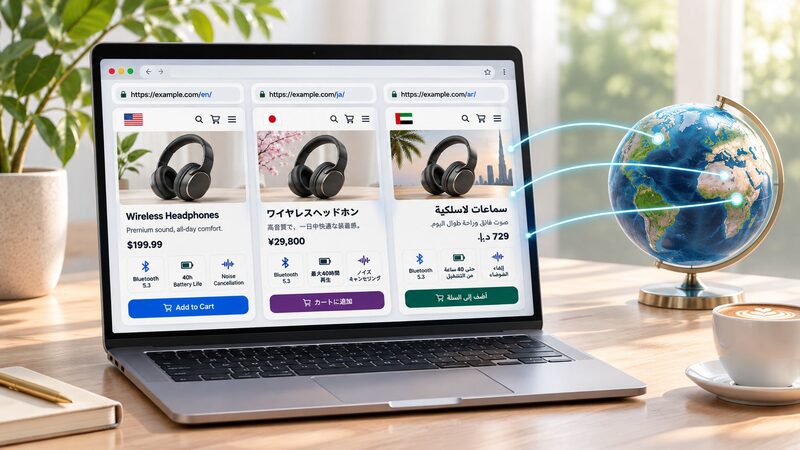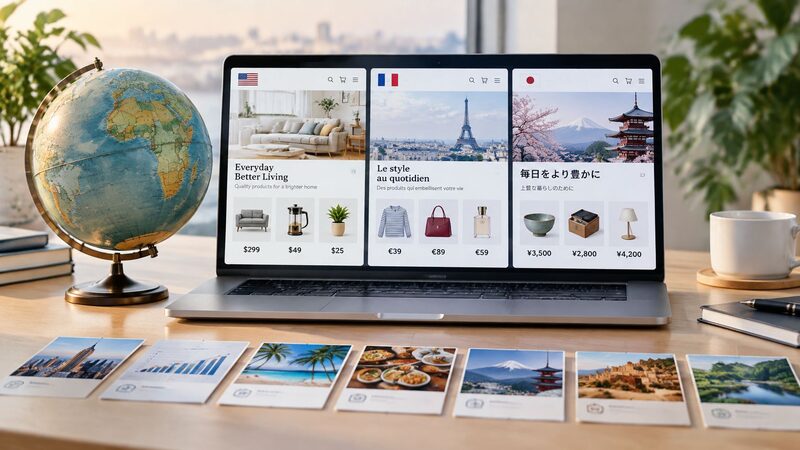
The top global sites aren't winning with just two or three languages. In 2024, the 25 highest-ranked global brand websites supported an average of 58 languages, according to Byte Level Research's study of 150 leading global brands, as reported by MultiLingual. You don't need 58. You do need to stop making the mistakes that sink most localized sites: language choices buried in footers, one translation stretched across ten countries, and currencies displayed but never charged.
These seven multilingual website examples show the structural decisions behind sites that work, from a global retailer to a two language specialist store. For each one you'll get the localization model, why it works, where it breaks down, and one tactic you can copy this week without a global brand's budget.
Table of Contents
1. CIQRA Sites
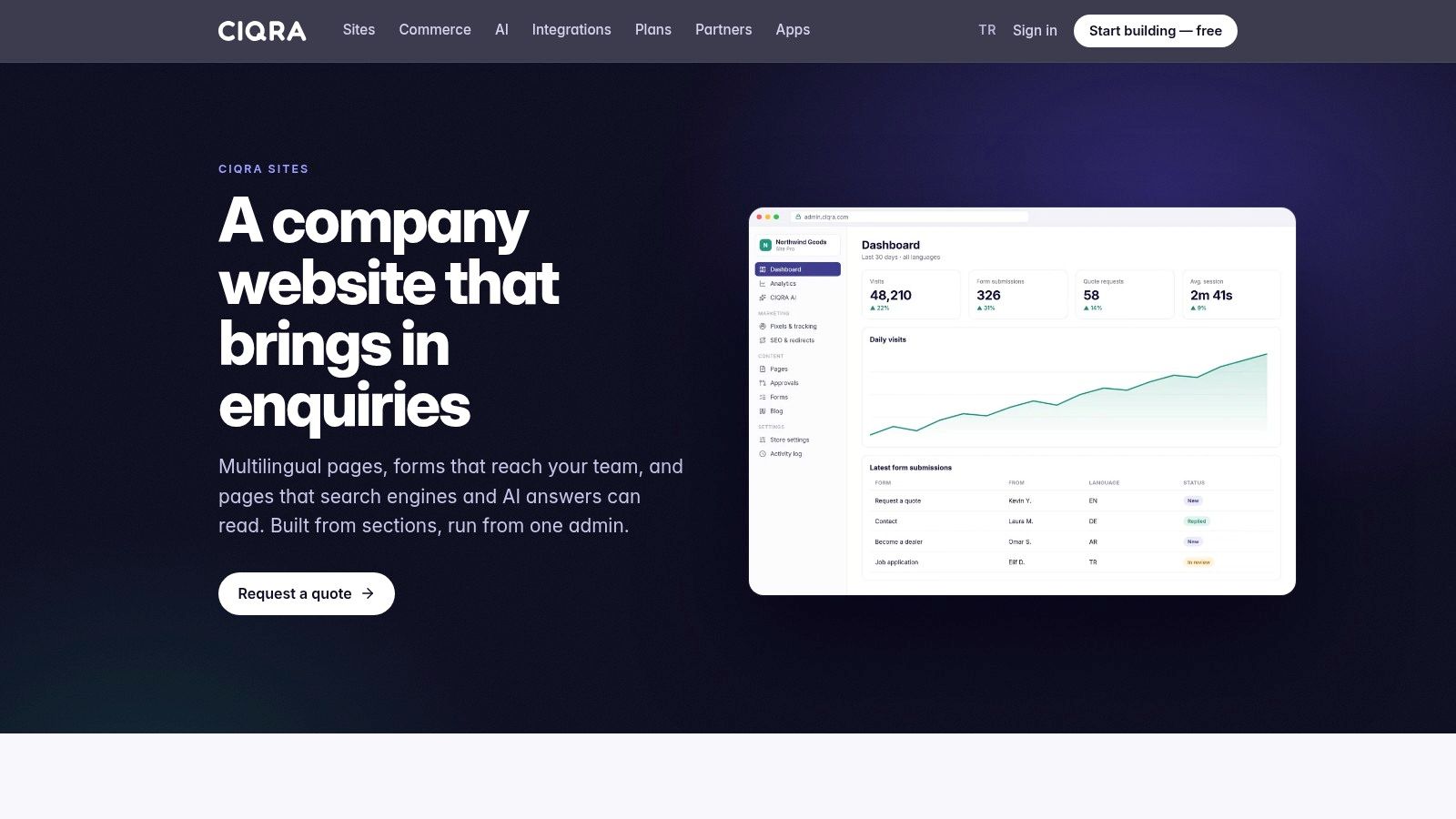
CIQRA Sites is a website platform, not a finished storefront. Its localization model is built around separate editing screens for each language. German and French editors can work on their own versions, while approval workflows, version history and permissions help teams review changes before publication.
That structure matters more than adding languages to a page. If translated content shares a single editing workflow, updates can overwrite one another or wait on the same editor. CIQRA also supports language-specific sitemaps and structured data, which help search engines interpret localized pages.
Why the structure holds up
The web's published content is spread across many languages. W3Techs' content language ranking puts English at approximately 49.2% of websites whose content language is known, followed by Spanish at 6.0% and German at 5.8%. That makes localization an ongoing publishing task, not a one-time translation export.
Publishing controls: Permissions, approval workflows, activity logs and version restoration support review and recovery when a change goes wrong.
Website tools together: Section-based page building, theme editing, multilingual pages, a blog, newsletters, live search and enquiry forms share one administration interface.
Room to add commerce: CIQRA Sites and Commerce use the same platform and admin, so a company can add a catalogue, basket and checkout without migrating its website.
Hosting is in the European Union. The Enterprise CMS plan starts from $1,499 per month on an annual agreement. The practical trade-off is that a platform can organize multilingual publishing, but teams still need people who can write and review each language.
Practical rule: Give each language its own editing surface, then define who reviews and approves changes before they go live.
Takeaway you can apply: Set up language-specific editing and sitemaps from the start. Even a two-language site benefits when editors can update their own version without interfering with another.
2. IKEA
Start at IKEA and you don't pick a language first. You pick a country. That's the whole lesson.
IKEA runs country-specific websites because stock, delivery options, kitchen planning services, and prices change by market, not just by language. Language then varies inside the country. Belgium offers English, French, and Dutch, while the US site offers English and Spanish. A French speaker in Belgium and a French speaker in France see different stores because they're buying from different operations.
That country-first logic matches how people browse. In 2025, 59% of web users surveyed across six European countries said they preferred browsing content in their most preferred language, according to the European Commission's Language Tools study. IKEA's international market list makes all those destinations visible instead of hiding them behind automatic redirects.
The trade-off is obvious. You might land in the right country and still not find your preferred language. IKEA can absorb that friction because its catalogue is essential enough that shoppers persist. A smaller home retailer usually can't.
There's also a search cost to running many regional versions. Without clean signals, search engines can send a Belgian shopper to the French store, which is why a disciplined multilingual SEO and hreflang setup isn't optional at this scale.
Takeaway you can apply: If availability, delivery, or price differs by country, route by country first and offer languages inside it. Don't let a language toggle pretend those operational differences don't exist.
3. Apple
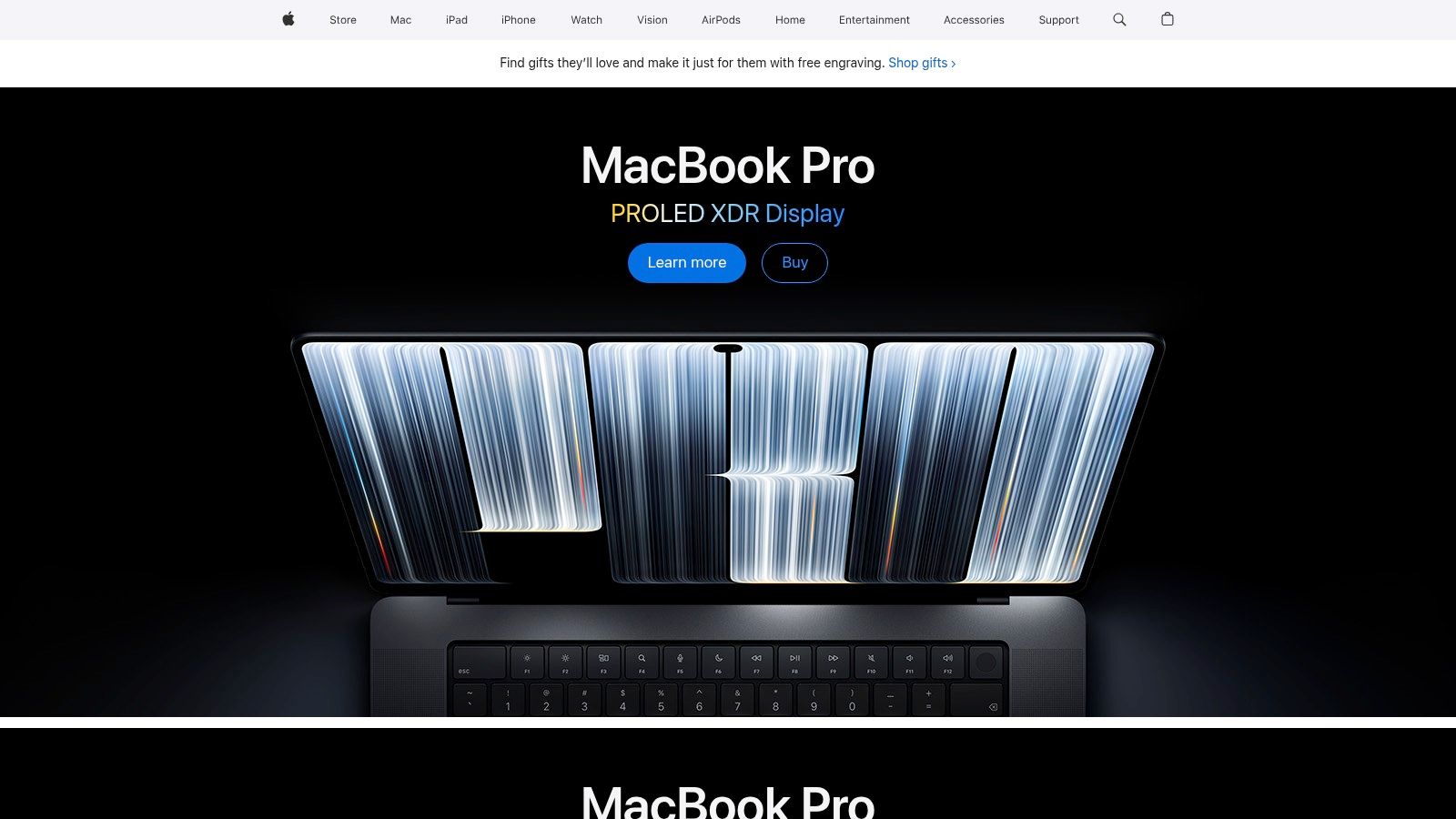
Apple solves a simpler problem than IKEA and solves it cleanly. Its central country-and-region chooser routes you to a local destination where pricing, product availability, and carrier details are already correct. Some countries then split again by language, such as English and French for Canada.
Consistency as the strategy
Every regional version looks and behaves like Apple. Same layout, same product hierarchy, same restraint. That consistency isn't just branding discipline. It's a cost decision. When every market shares one design system, a product launch becomes a translation and pricing exercise instead of dozens of separate redesigns.
The commercial case for bothering is blunt. In 2025, 60% of shoppers reportedly rarely or never bought from English-only websites, according to figures summarized in Weglot's multilingual website statistics guide. Apple never asks a customer to decode a foreign store to spend a large amount of money.
The weakness is that the chooser is a directory, not a preference. You pick a region, and you may still need another step to reach your language. Apple also sells a tight product range with global demand, so its model flatters businesses whose catalogues are messier. If you're mapping which markets deserve that treatment first, start with the expansion logic in this guide to reaching new markets and growing your business before you translate anything.
Takeaway you can apply: Lock one global template and localize only price, availability, and legal content at launch. Consistency is what makes each new market cheaper than the last.
4. Airbnb
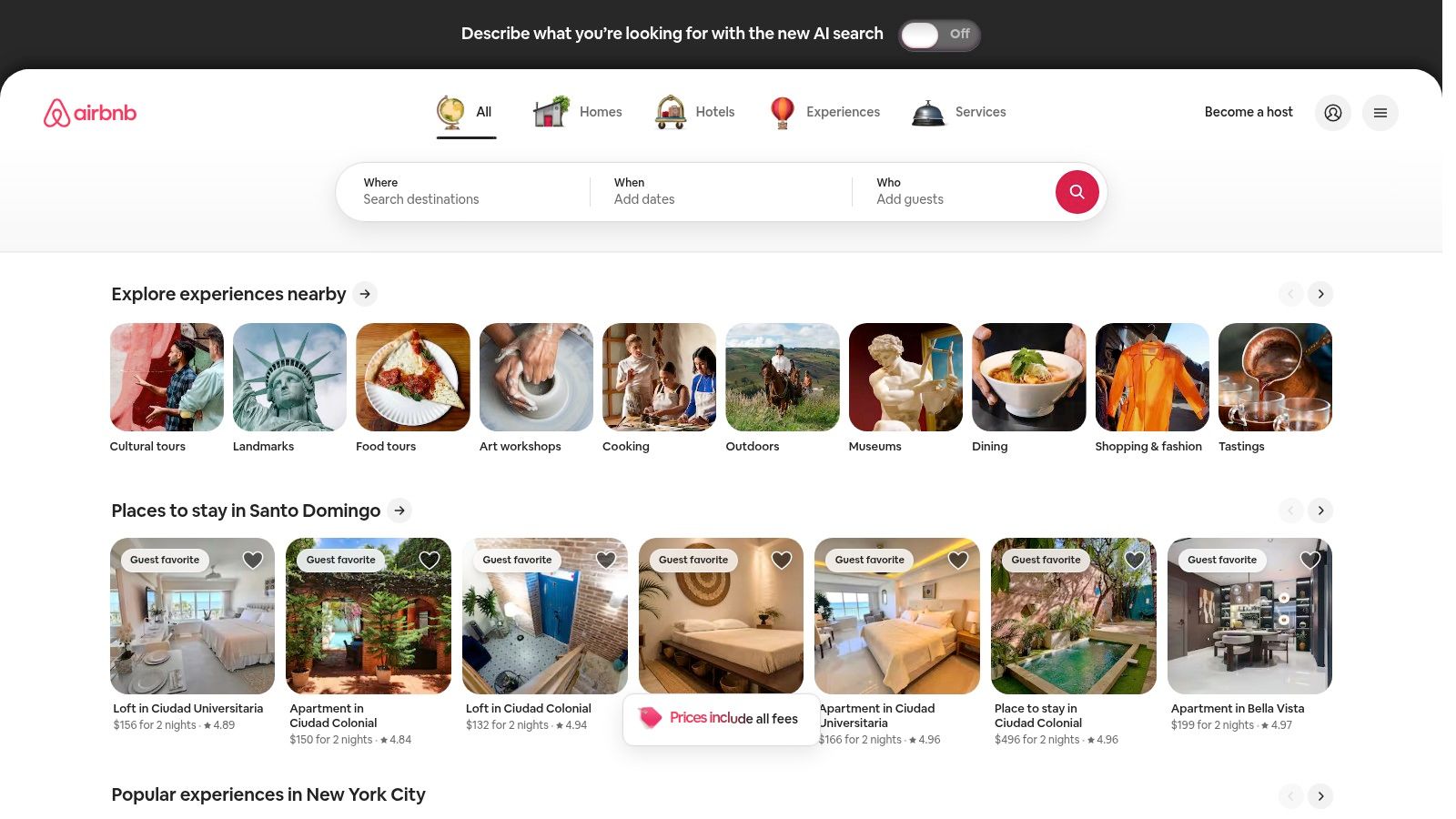
Most sites translate copy their own team wrote. Airbnb has to translate copy its users wrote, and that's a harder problem.
You set language and currency preferences as browsing or account settings, and the platform carries them across search, listings, and booking. Host descriptions, guest reviews, and messages can be automatically translated into your viewing language. Without that layer, a marketplace collapses into listings you can't evaluate, which means trips you won't book.
That focus on transactional moments is where localization earns its money. A multilingual marketplace localization study in MultiLingual magazine found that in a comparable Kazakhstan market, adding a Kazakh-language interface increased day-seven retention from roughly 75% to 80%. Same pricing, same flows. Language in the workflow, not just on the homepage, changed the outcome.
Where Airbnb's model strains is exactly where automation always strains. Machine translation misses nuance in reviews and host messages, sometimes the nuance that would have warned you off a property. And the currency you browse in isn't necessarily the currency you're charged in, since supported payment currencies and methods differ. Display localization and payment localization are separate jobs, a distinction worth understanding through the international selling features that connect translated pages to actual cross-border checkout.
Takeaway you can apply: Decide your policy for user-generated content before launch. Translate reviews and messages automatically if volume demands it, but label them as translated and always offer the original.
5. GORNATION
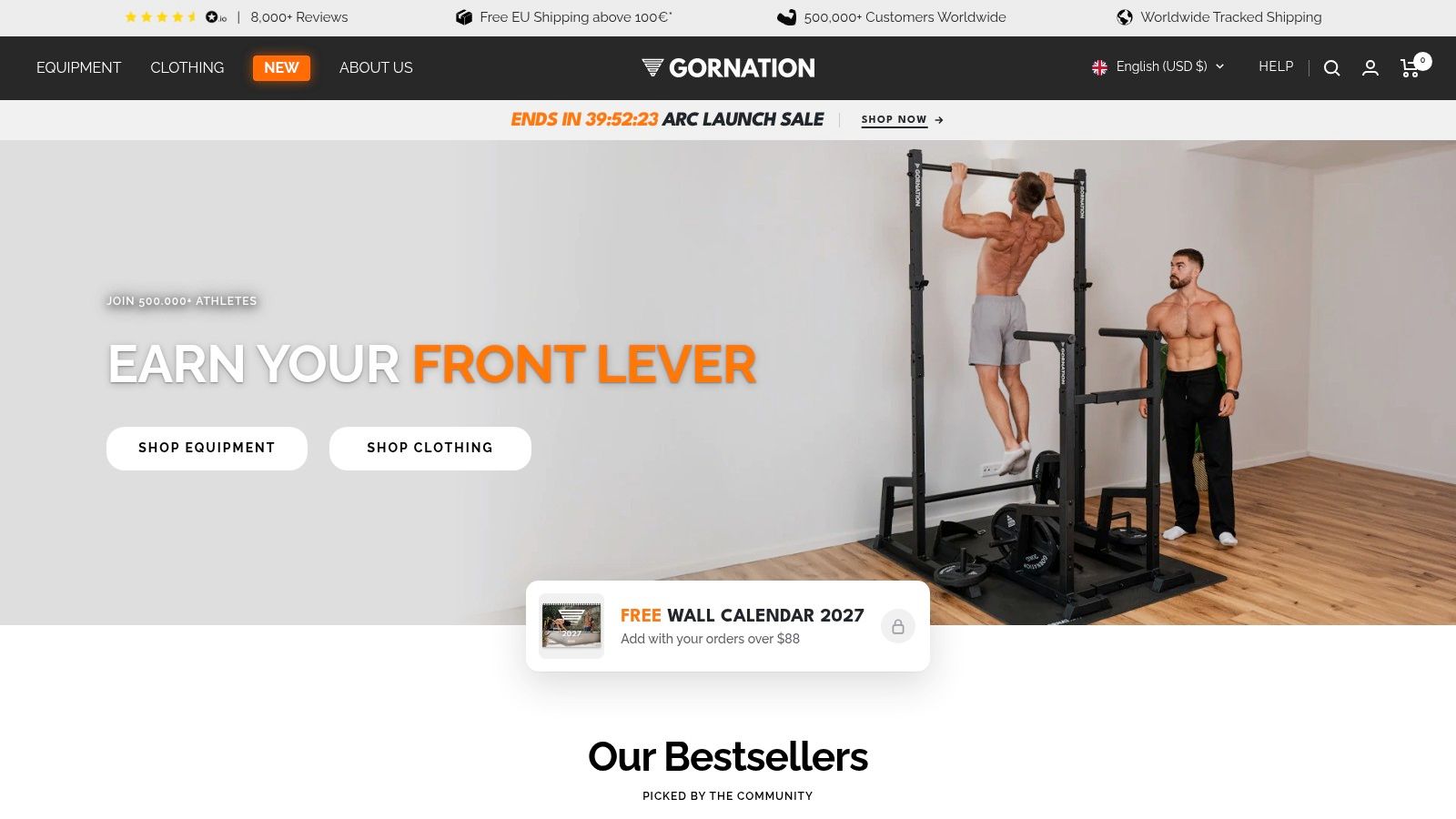
GORNATION sells calisthenics and street workout equipment. Its showcase lists four languages: English, German, French, and Italian. That gives shoppers four language options within one specialist store, rather than requiring a separate storefront for every language.
Focused catalogues translate better
Product pages for specialist equipment need to explain specifications, comparisons, and sizing. Translating only product names can leave shoppers without the information they need to choose. A Spanish and Portuguese localization case study from VerboLabs covered more than 850 product pages and reported a 27% increase in conversion rate and 44% growth in organic traffic from Spanish- and Portuguese-speaking regions. The practical lesson for a smaller catalogue is to translate the full buying argument on priority products, not just their titles.
A language list shows which versions are available; it does not show how well each version performs. The case for translation also depends on the product: fitness equipment may need different localization choices from fashion sizing or B2B specifications.
Takeaway you can apply: Fully translate the templates for your highest-revenue products, including comparison and sizing content. Then measure indexation and conversion before extending the work to the rest of the catalogue.
6. CannyCo
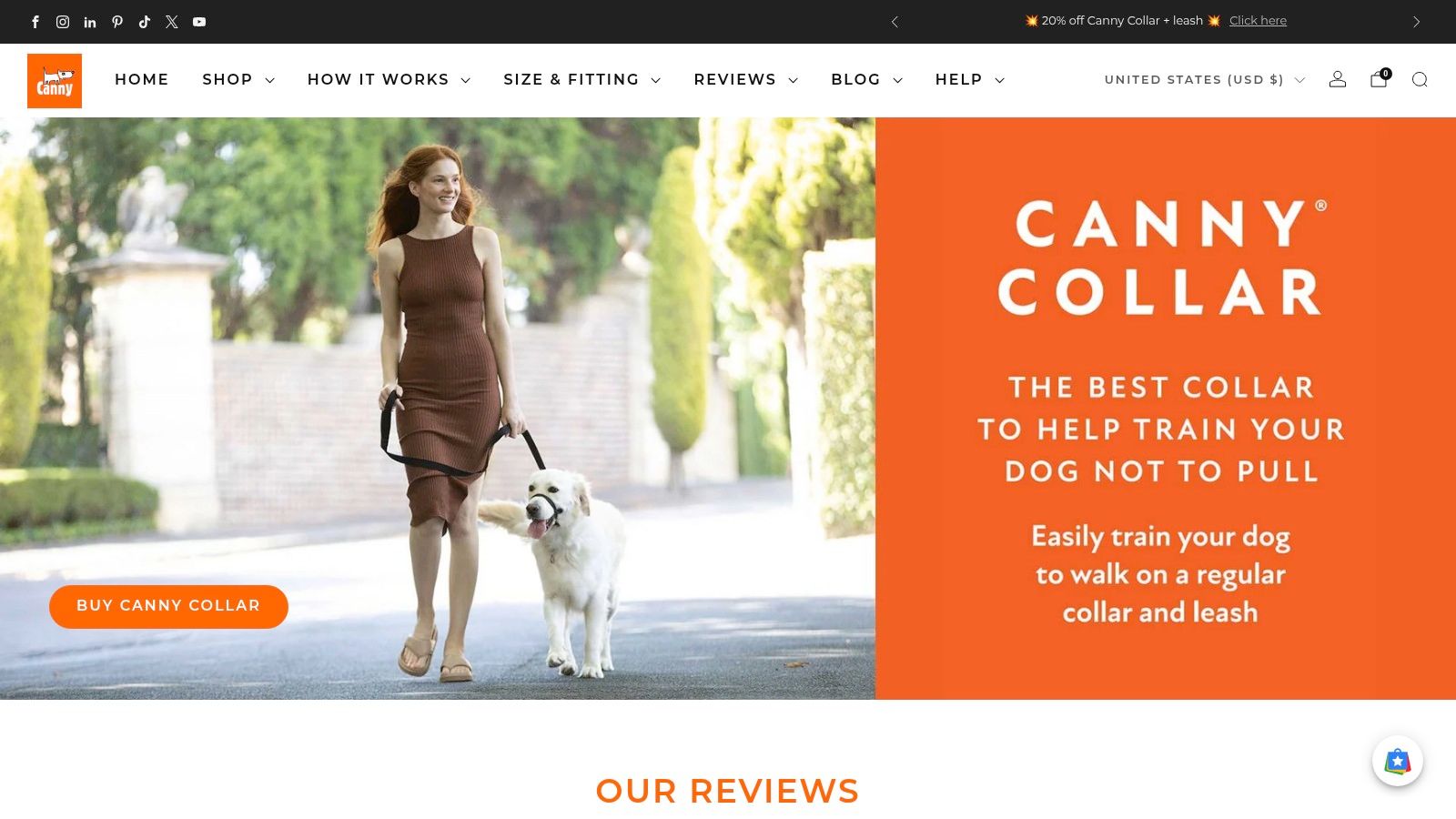
CannyCo sells dog training collars and leads, and its structure answers a question language toggles can't. Where will this ship from?
Instead of one site with a switcher, CannyCo runs regional storefronts tied to shipping destinations, with versions in multiple European languages. The US site tells overseas customers which country site to visit. On each store, product pages explain how the collar works, how to fit it, and which size to choose. That guidance content is doing commercial work, because a badly fitted collar becomes a return.
Guidance before purchase: Fitting and sizing explanations reduce the misunderstandings that drive returns.
Store matched to destination: Regional sites can show shipping and returns terms that are true for that buyer.
Clear redirection: Overseas visitors get told where to go instead of discovering shipping limits at checkout.
This pairing of language with fulfillment is rarer than it should be. DHL's e-commerce trends report for businesses reports that 62% of surveyed businesses offer local-language and local-currency options in all international markets, which means a large minority don't do it consistently. CannyCo's friction is the flip side. Customers may hop between regional sites, and policies or availability can differ between them, so each storefront has to state its own terms clearly.
Takeaway you can apply: Localize the content that prevents returns first, sizing, fitting, delivery, and refund rules, in the store that ships to that customer.
7. Diggn'It
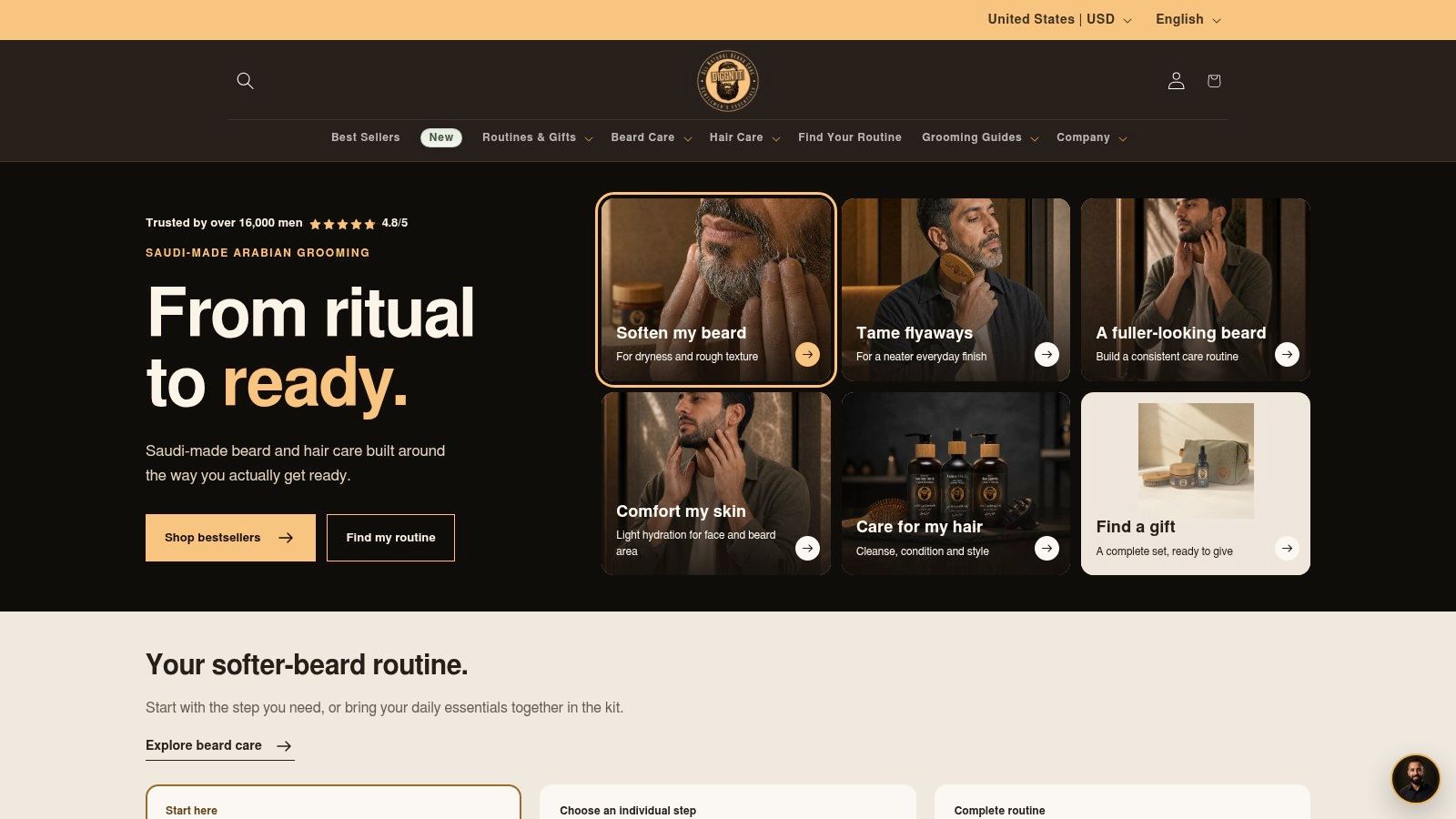
Two languages done properly beat ten done halfway. Diggn'It, a Saudi-made beard and hair care brand, runs English and Arabic versions of its store and treats both as first-class.
Arabic means right-to-left layout, and that's not a text swap. Navigation, product grids, icons, and checkout flow all mirror. Plenty of brands translate Arabic copy into a left-to-right template and call it done. Shoppers notice immediately, because the whole page reads against their eye movement.
The merchandising also localizes well. Products are organized around care routines rather than raw categories, with kits and bundles presented alongside individual items, so a shopper buys a regimen instead of assembling one. Guidance is offered in Arabic or English with human support available, which closes the loop that translated product pages alone leave open. If someone can read your site but can't ask a question in their language, you've localized the brochure and abandoned the conversation.
A language you can't support with service, layout, and checkout is a promise you're not keeping. Add fewer languages and keep the promise.
The limits are real but narrow. Diggn'It focuses on Saudi customers, so its delivery and commercial details won't transfer cleanly to other markets. Routine-led merchandising also suits personal care better than, say, spare parts, where shoppers search by specification.
Takeaway you can apply: If you add an RTL language, mirror the full layout and test checkout in it yourself. Half-mirrored pages are worse than not offering the language.
The 7 multilingual website examples at a glance
Localization model | Languages shown | Best lesson for your site | Best for |
|---|---|---|---|
CIQRA Sites: hosted platform with separate editing for each language | Not specified | Pair language-specific content with sitemaps and hreflang; use review and version controls | Teams managing multilingual publishing and planning to add commerce |
IKEA: country-specific storefronts with market-dependent language options | Belgium: English, French, Dutch; US: English, Spanish | Connect country selection with the languages and offerings available in each market | Large-catalogue retailers serving multiple markets |
Apple: central country-and-region chooser with localized destinations | Canada: English and French; other options vary by market | Make localized destinations easy to find while keeping a consistent brand | Brands serving many countries with a consistent global identity |
Airbnb: language and currency preferences with automatic translation of user content | Selected viewing language; specific options not listed | Localize user-generated content as well as interface copy, and distinguish displayed currency from payment currency | Marketplaces with reviews, listings, and customer messages |
GORNATION: multilingual specialist ecommerce store | English, German, French, Italian | Organize translated product pages around clear categories and product comparisons | Specialist retailers with products that need explanation |
CannyCo: regional storefronts aligned with shipping destinations | Multiple European languages; specific languages not listed | Connect language choices with shipping guidance, regional policies, and product information | Retailers selling products that need sizing or usage guidance |
Diggn'It: English and right-to-left Arabic site versions | English, Arabic | Design RTL pages natively and localize the full experience; do fewer languages thoroughly | Small stores serving bilingual markets, especially beauty and personal care |
Key Takeaways Choosing Your Own Localization Model
Three models recur across these examples. Country-first sites such as IKEA, Apple, and CannyCo route by market because stock, price, shipping, or law changes at the border. Language-first setups such as CIQRA Sites and GORNATION keep one operation and give each language its own editing surface. Preference-based browsing, Airbnb's model, layers language and currency over content that users themselves create.
Choose by asking how much your operation differs per market. If only the words change, you're language-first and shouldn't pay for separate storefronts. If delivery zones, tax, or availability change, language toggles will lie to your customers and you need country routing. If customers write half your content, your translation policy for reviews and messages matters more than your homepage copy.
The returns justify the discipline. In 2024, 96% of B2B leaders surveyed by DeepL reported positive return on investment from localization initiatives, and 65% reported at least a threefold return, according to a summary of DeepL's B2B localization findings. The historical picture is stable too. W3Techs' historical content language overview shows English at 49.3% in November 2025 and 49.5% in the latest displayed observation, so this isn't a trend that will reverse before your site launches.
One newer risk deserves attention. A small December 2025 test described in an AIRankLab review of international GEO found Google, Bing, and Copilot generally returned correct localized URLs when hreflang was present, while ChatGPT, Perplexity, and Claude often returned the English original. The sample was limited, but the lesson holds. Test your localized pages in AI assistants, not just search engines, and use structured data and translated FAQs to give those systems the right version to quote. Tools that help international shoppers choose products in their own language point the same direction, toward assistance that works inside each market rather than above it.
If you want per-language editing, language-specific sitemaps, and the option to add a store selling in several languages and currencies without migrating later, CIQRA is built around exactly these patterns. Our admin is available in 20 languages, and Sites and Commerce share one platform, so the model you start with doesn't box you in.
Start with the model that matches how your business operates, then build it on CIQRA, where each language gets its own translation screen, language-specific sitemaps and hreflang are handled for you, and you can add a multilingual, multi-currency store later without migrating. Visit CIQRA today, launch your first two languages properly, and expand from a structure that won't need rebuilding.